
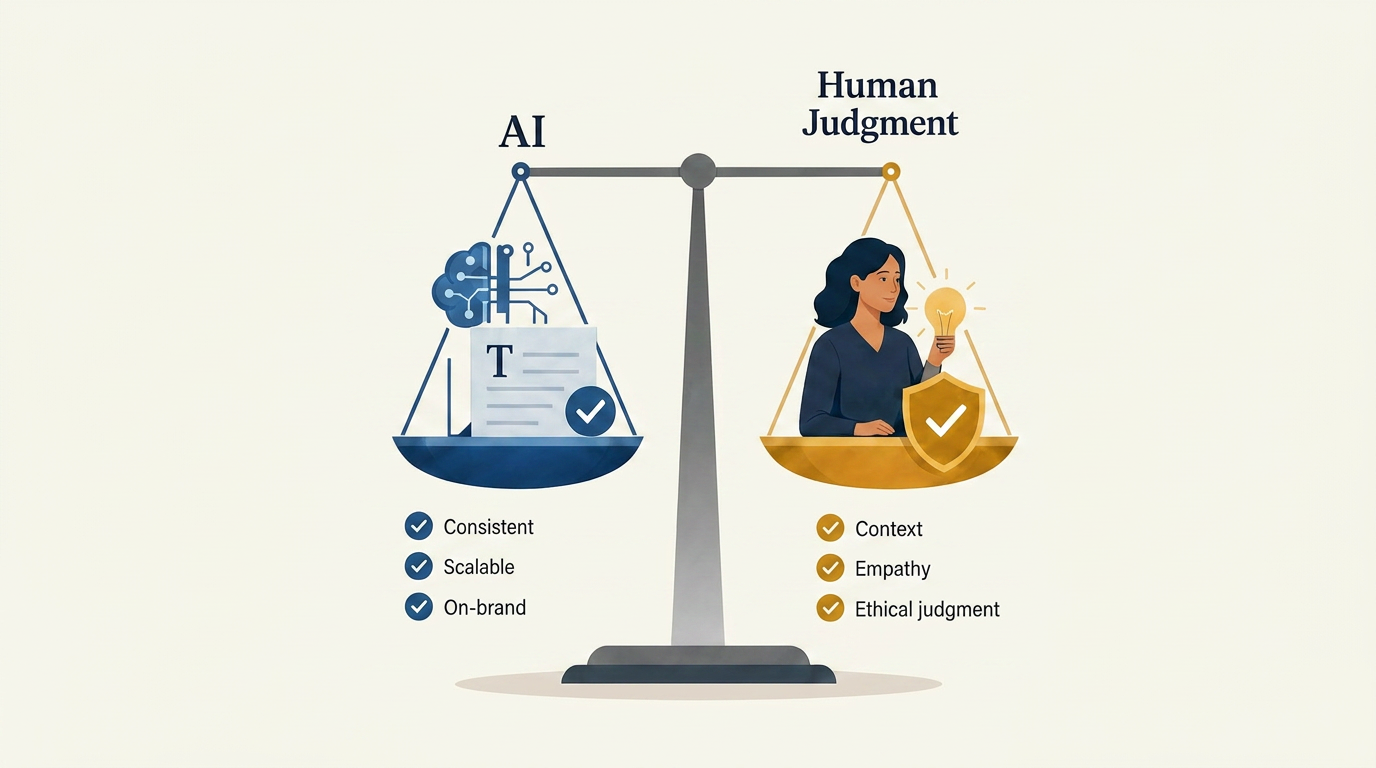
There’s a version of the AI-in-marketing conversation that’s all upside: faster production, lower costs, bigger output from smaller teams. That version is accurate as far as it goes. What it tends to skip over is the distinction between what AI can do for your brand and what it cannot — and I think that distinction matters more than most AI conversations in the association space are acknowledging right now.
What Brand Actually Is
For associations, brand is the accumulated trust your audience has in your organization. It’s built through consistent behavior over time — what you say, what you don’t say, how you respond when something goes wrong, whose interests you visibly prioritize when priorities conflict.
None of that is a content problem. It’s a judgment and values problem. AI can produce content that’s consistent with your brand voice. It cannot make the judgment calls that determine whether your brand is actually worth trusting.
When an association takes a public position on a policy issue that affects its members, that’s brand. When it decides how to respond to a member complaint that goes public, that’s brand. When it chooses to say something true and uncomfortable rather than something comfortable and vague, that’s brand. AI doesn’t make those calls. The organization does. The board does. The executive director does.
What AI Does Well in the Brand Context
Within the parameters humans set, AI executes brand consistently. Voice consistency, tone calibration, terminology adherence — these are pattern-matching problems that AI handles well once a clear brand guide exists. If your association doesn’t have one yet, that’s the starting point before any AI adoption conversation.
AI is also useful for brand auditing — running existing content through a clear brand brief and asking what’s on-voice versus off-voice is legitimate quality control work that would otherwise require a human to read every piece carefully. These are real contributions. They make the brand more consistent at the execution layer. They don’t substitute for the human layer underneath.
The Risk Worth Naming
As AI handles more content production, the humans responsible for brand have more time. The question is what they do with it.
The risk I see is that the time gets absorbed by more production oversight — reviewing AI drafts, managing prompts, approving output. That replaces one form of production work with another, without creating space for the brand-building work that only humans can do. I don’t think there’s a universal answer here, but it’s worth naming as a real failure mode rather than assuming the time will automatically go to the right things.
The organizations that will build the strongest brands in an AI-assisted environment are probably the ones where the humans freed from production are doing more relationship work, more honest communication with members about hard topics, more deliberate positioning. The brand advantage accrues to organizations where AI handles execution and humans handle judgment — not to organizations where AI handles execution and humans manage the AI.
The Question Worth Asking First
If your organization is adopting AI for marketing, the first question probably isn’t which tools to use. It’s what you’re going to do with the time that gets freed up.
If the answer is “produce more content,” there’s a real possibility you’re missing the bigger opportunity. If the answer is “have conversations we haven’t had time for, take positions we’ve been avoiding, build relationships we’ve been too busy to tend” — that’s where the brand actually gets built. AI handles the output. What the organization does with the freed-up judgment is the brand decision. I don’t think that’s a settled question for most associations right now. It’s worth sitting with before the tools get deployed.



Leave a Reply